Store your solar power instead of giving it away.
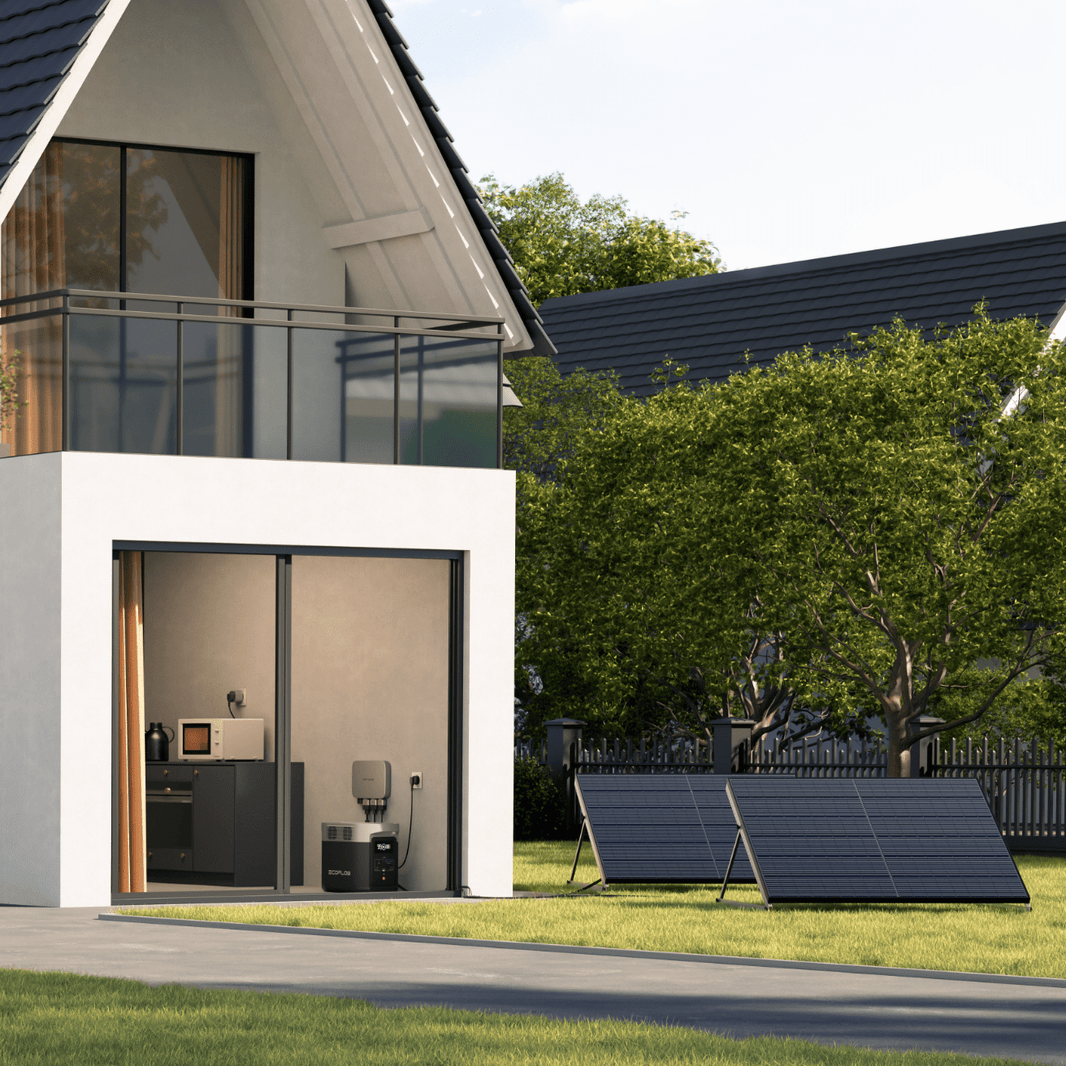
Plug-in storage for your existing solar setup, and portable power stations for camping, power cuts and working off-grid.
Frequently chosen
View all storage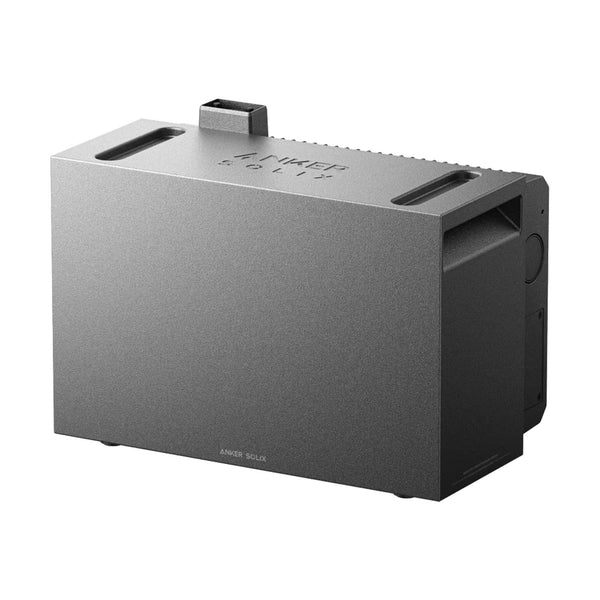
Anker SOLIX BP5000 Expansion Battery
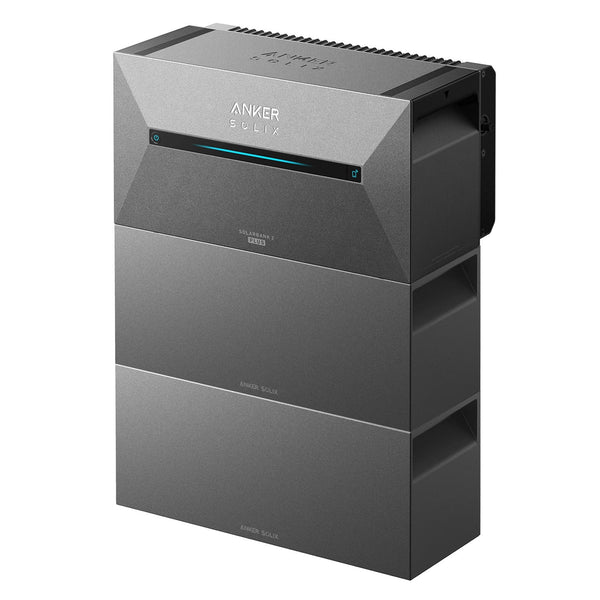
Anker SOLIX Solarbank 3 E2700 Pro + 2x BP2700 Set 8.1 kWh Balcony Solar Battery Storage
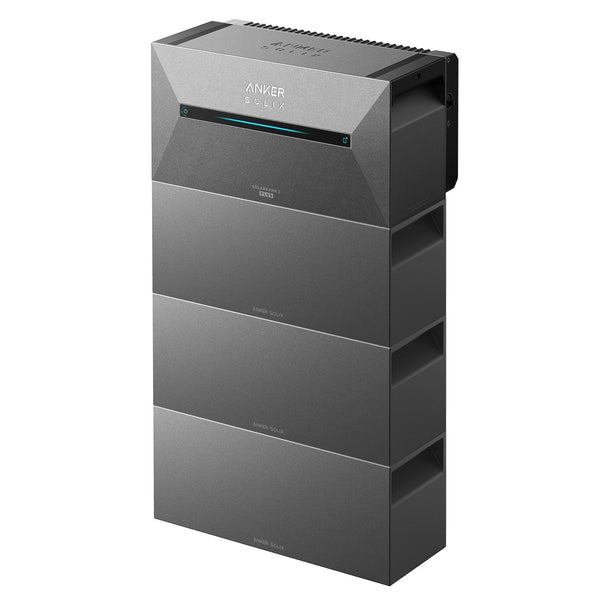
Anker SOLIX Solarbank 3 E2700 Pro + 3x BP2700 Set 10.8 kWh Balcony Solar Battery Storage
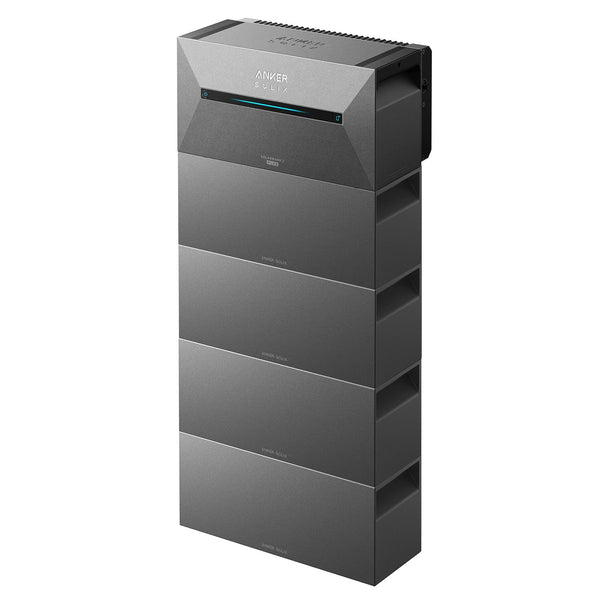
Anker SOLIX Solarbank 3 E2700 PRO + 4x BP2700 Expansion Battery
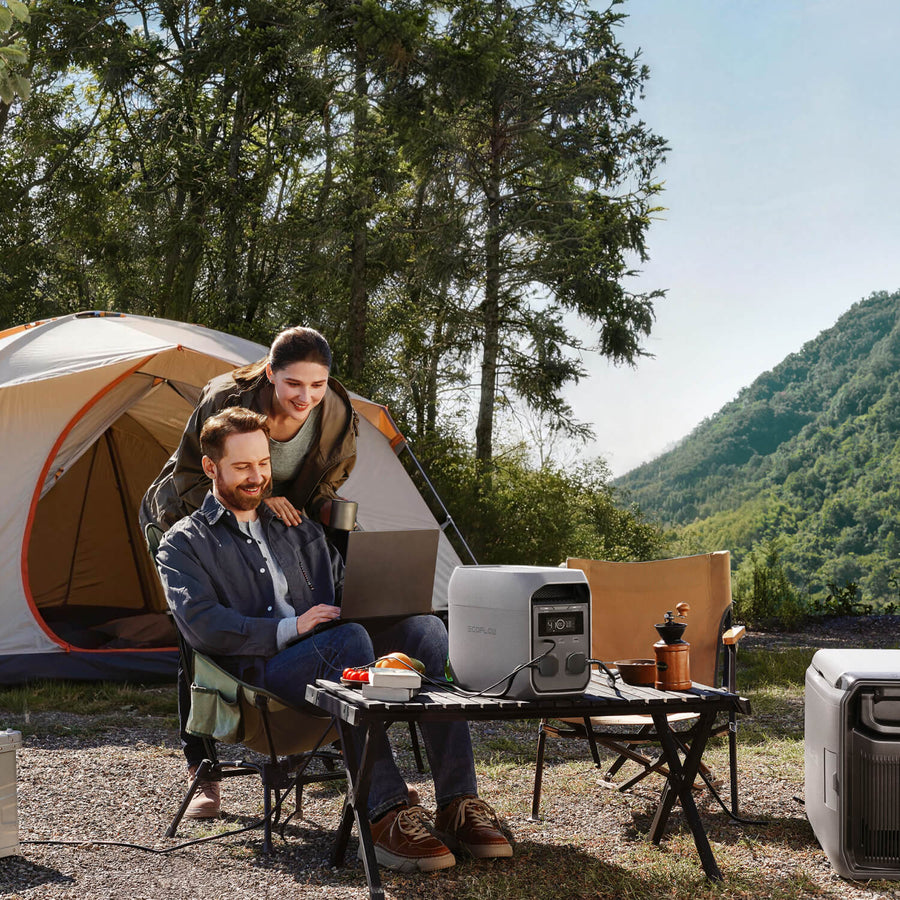
Store it first, export second.
Solar without storage generates while nobody is home. The midday surplus goes to the grid, usually for very little. With storage, self-consumption typically moves from around 30 % to over 70 %.
The unit charges through the middle of the day, then feeds 200 – 800 W back into the home through the evening — fridge, router, lights, cooking. Modular means you start at 2.7 kWh and add batteries later without replacing the inverter.
Storage from 5 kWh upRegistration and export limits explained
What customers say
„Straight advice on the phone, no sales pressure. The unit arrived in four days and setup took an afternoon.“
„I started with 2.24 kWh and expanded to 4.48 kWh over the summer. Exactly as described — nothing had to be replaced.“
„The power station has run in the camper for a year. A question about charge rate was answered the same day, by someone who knows the kit.“
Home battery storage, explained honestly
The questions we are asked most often on the phone — answered with numbers, not promises.
How many kWh of storage do I need?
As a rule of thumb, your evening usage sets the capacity, not your panel output. A two-person home using around 2,500 kWh a year draws 2 – 3 kWh in the evening, so 2.7 – 5.4 kWh makes sense with a small array. At 4,000 kWh a year and a larger array, 5.4 – 8.1 kWh is the sensible range. Capacity beyond what your panels can refill in a day sits empty in winter.
Do I need to register the battery?
Rules differ by country and by network operator, so check what applies where you are before installing. In most markets a plug-in system has to be notified to the local grid operator, and the battery is covered by the same notification as the solar system it sits behind. Paperwork is included with every unit — if you are unsure, call us and we will walk through it.
Is there a limit on what the unit can feed into the house?
Export limits apply to the power fed into your home wiring — not to your panel output and not to the battery's capacity. Units rated at 1,200 W or 2,400 W can be capped in the manufacturer's app to whatever your market allows, so you can install more panels and more storage while the export stays within the limit. Check the limit that applies to you before you set it.
What plug does it use?
Every unit ships with the mains lead for the market it is sold in, and plugs into a standard socket. Some installations — a landlord's requirement, or a hard-wired connection — call for a fixed feed-in point instead, which needs a qualified electrician. The product page lists what is in the box.
Does zero export work, and do I need a smart meter?
Zero export means the battery only releases as much as the home is drawing at that moment. The system needs a consumption measurement to do it — depending on the manufacturer that is their own meter, a clamp meter in the consumer unit, or a reading from an existing digital meter. Your energy supplier's smart meter is not a requirement. The product page states which method each unit supports.
Can I expand the battery later?
On the modular systems, yes. The Anker SOLIX Solarbank 3 E2700 Pro grows from 2.7 to 10.8 kWh with BP2700 packs, the MARSTEK Saturn B2500-D from 2.24 to 8.96 kWh, and Zendure SolarFlow and EcoFlow STREAM expand in steps too. The inverter stays the same. Match the battery generation when you add.
How many charge cycles does LiFePO4 last, and what does the warranty cover?
The LFP cells in these units are rated at 4,000 to 6,000 full cycles down to 70 – 80 % remaining capacity. At roughly 250 usable cycles a year that is more than 15 years. Manufacturer warranties run from 5 to 10 years depending on the model, and your statutory rights apply on top.
Can the battery stay outside in winter?
Yes, on units rated IP65 with cell heating. Discharge is typically possible down to −20 °C; charging starts at around 0 °C, and on some models a cell heater covers the range below that. Choose a spot on a wall that is sheltered from rain and direct sun. Portable power stations are not designed for permanent outdoor use.
Not sure which capacity you need?
Tell us your annual usage and what solar you already have. We will tell you the capacity we would buy ourselves — Mon-Fri, 9am-5pm.